
When ‘History’ Becomes ‘Her Story’ Part I
Ruth Neumeyer
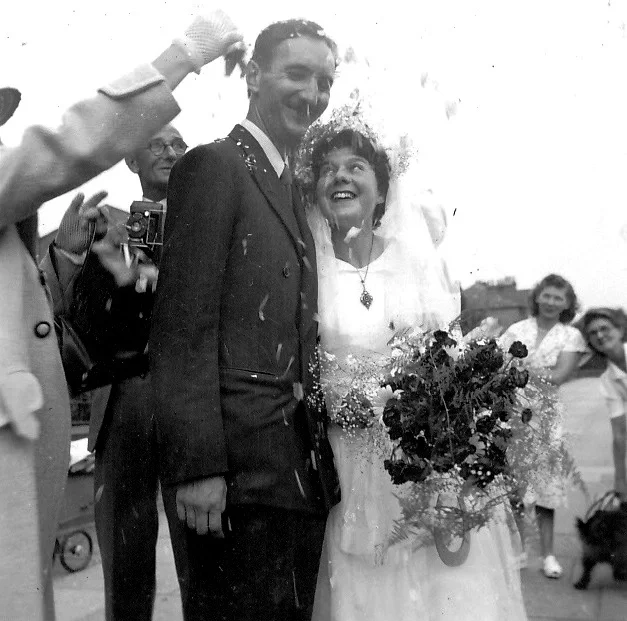
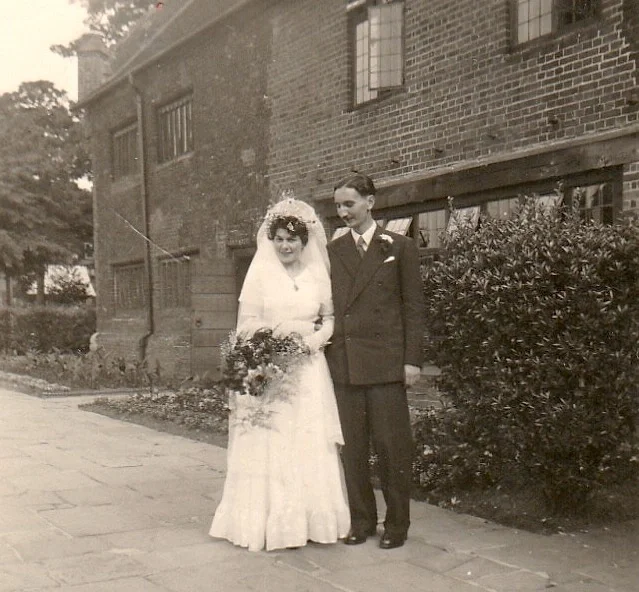
Ruth and Ron on their wedding day on the 1st August 1951
Tuesday’s Bride is a unique bridal boutique offering one of a kind, vintage and antique wedding dresses from its studio in Lewes. Within the fibres of the textiles, woven into each dress, are stories from their past. Over 2 parts, I share a special story.
Being trusted to be part of a dress’s ongoing story is a privilege. Sometimes the history of the garment is illusive, and sometimes, there is a depth of insight that is so fascinating, that the garment is no longer simply a beautiful remnant from the past, but a bridge between past and present. I feel a sense of importance in honouring women from the past. From learning about the lives and the times of the women who first wore the gowns, to restoring their dresses with the upmost care and respect, it is with pride that Tuesday’s Bride can perpetuate a sense of continuation and sisterhood which is inherently beautiful. Where history becomes herstory.
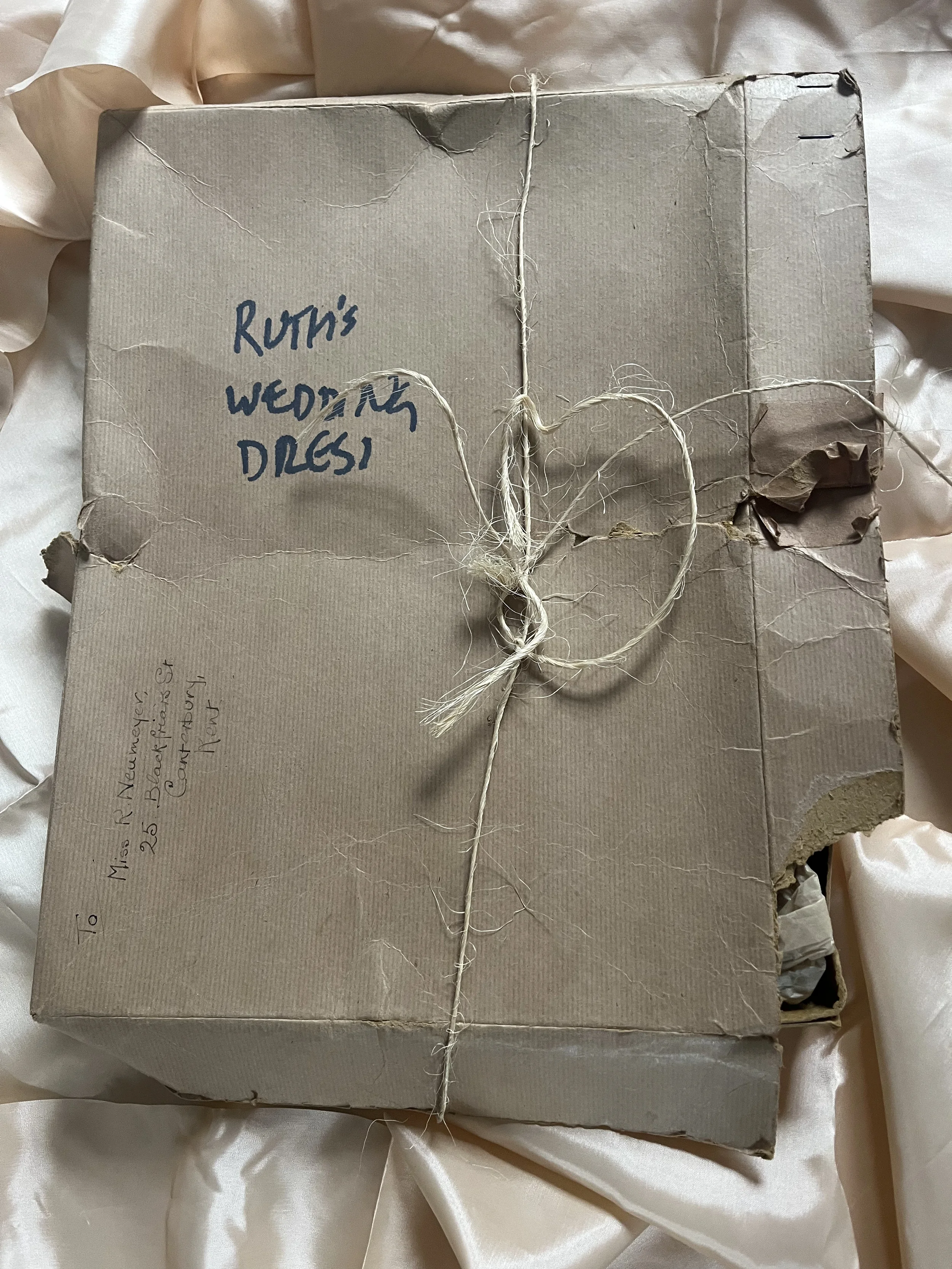
The original box of Ruth’s wedding dress
A Kind Invitation
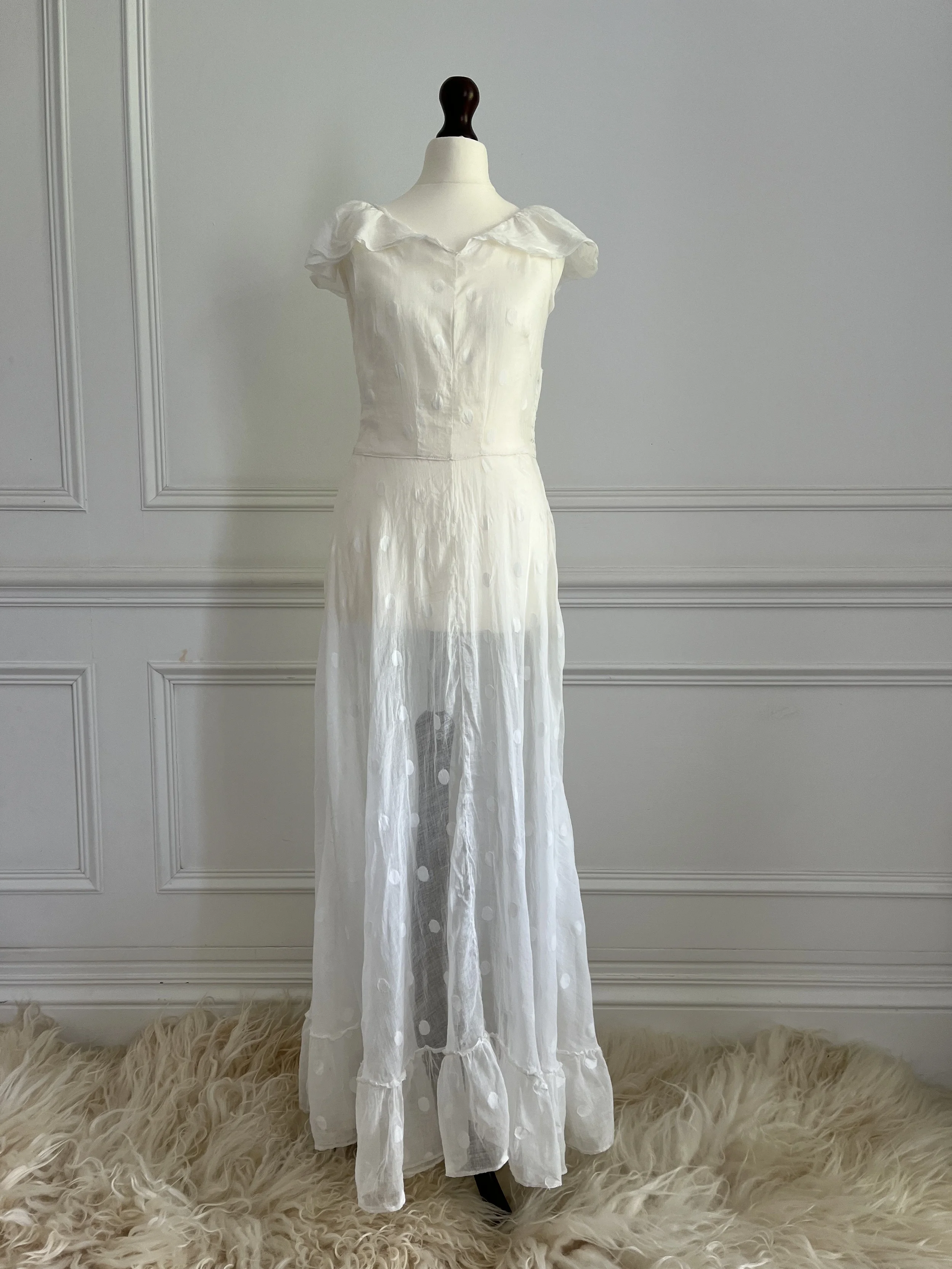
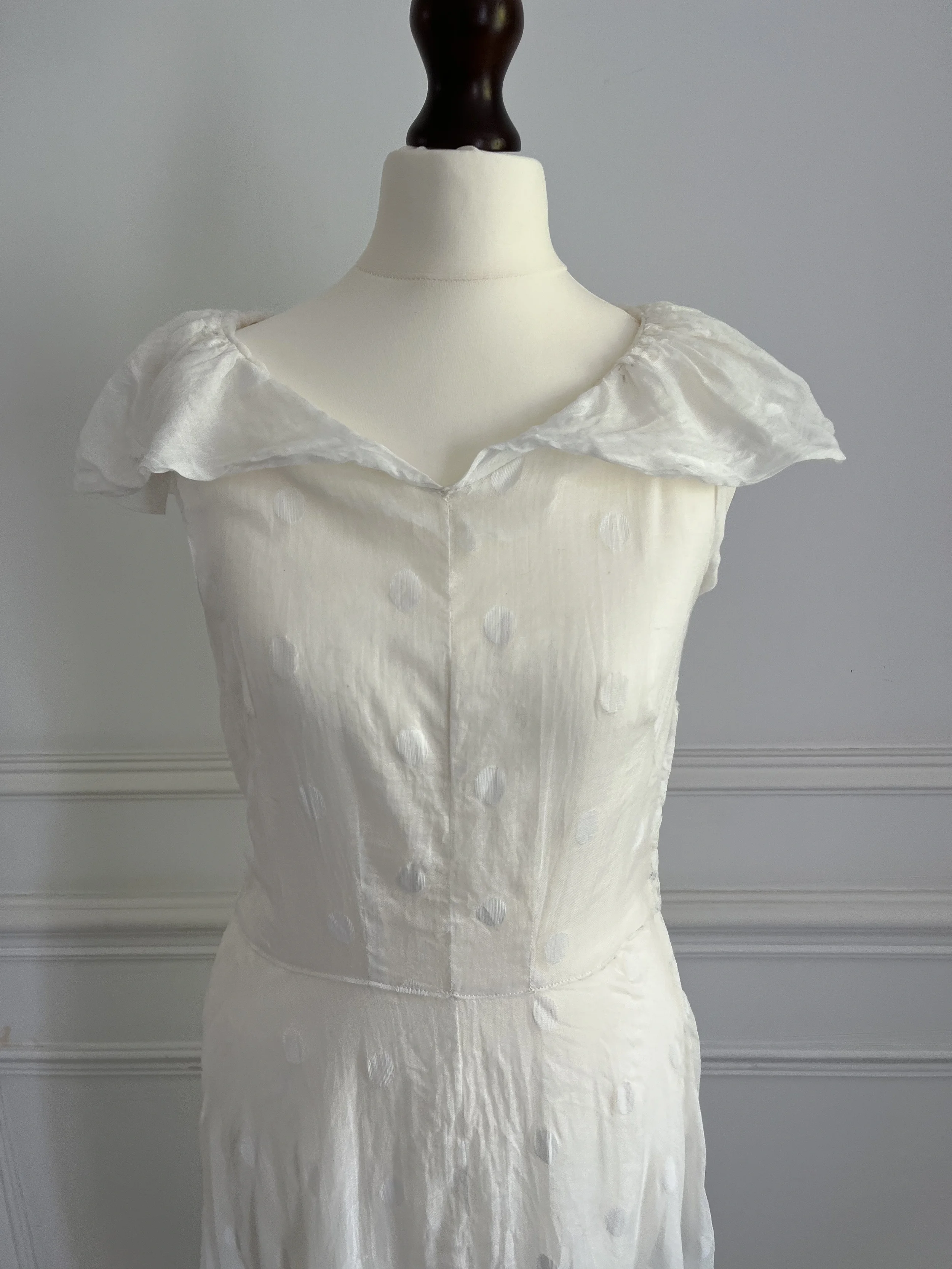
When I was invited to see ‘Ruth’s dress’, I had no idea what would greet me. ‘A simple homemade dress from the 50’s’, I’d been invited to look at a dress belonging to Tim’s mum. Warmly welcomed into a wonderful home, the gauzy dress was hanging in the window, the translucent fabric carrying an effortless breezy quality. I was immediately drawn to the gentle flocked polka dot, and the quiet details, a faintly ruffled hem and soft, portrait collar. We sat and chatted about Ruth’s life. Fragments of her past and her family were brought to life through stories and objects, each one illuminating a glimpse into her story, which blew me away. There was something special about the dress being on display in the room amongst our conversations, a quiet spectator, and a reminder of the privilege of playing a part in preservation and extension.
Tim kindly wrote a piece to share about Ruth; Part II of this series.
(D)restoration
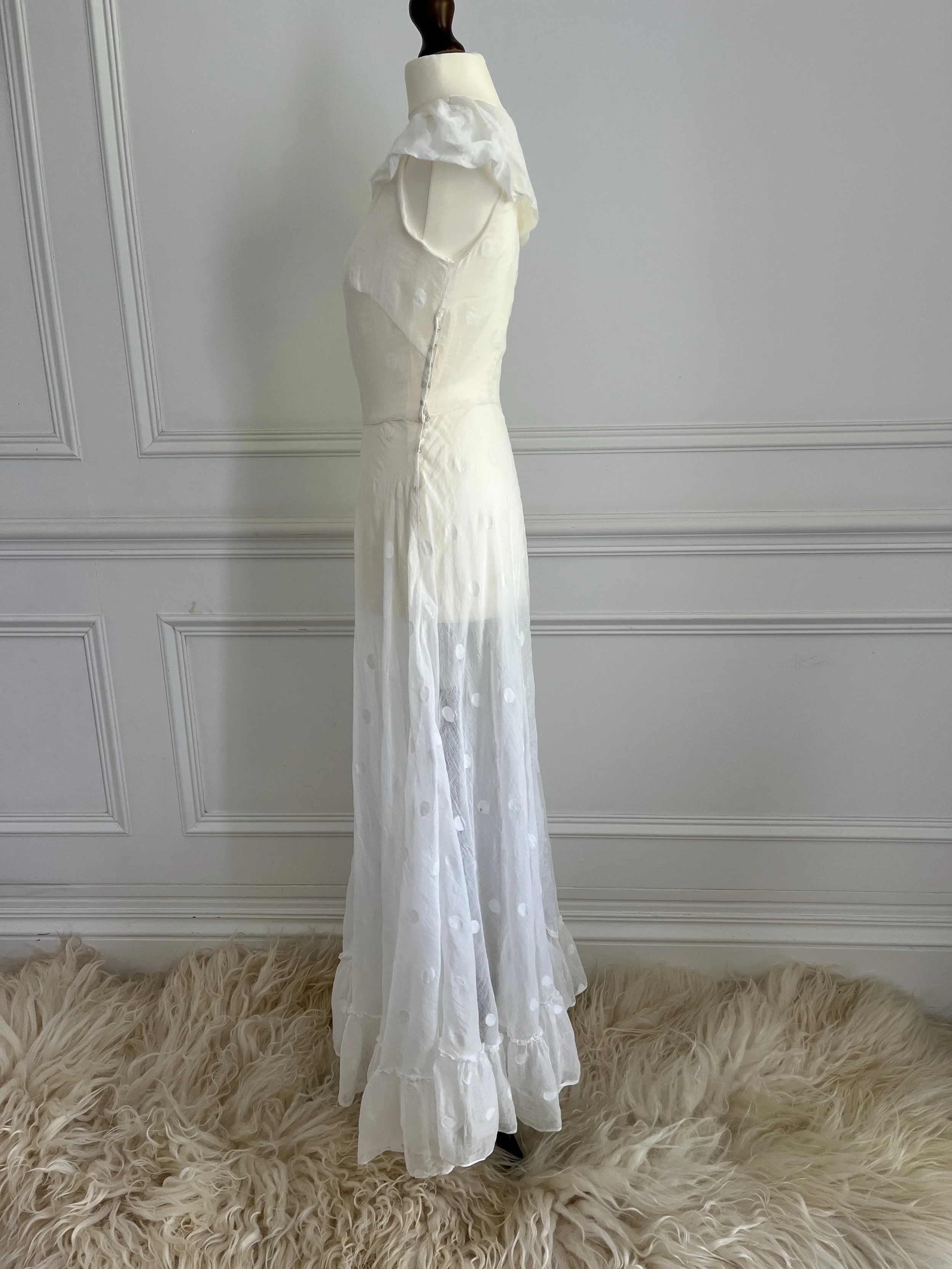
After taking the dress home, I set to begin its gentle restoration. As I became more and more familiar with the dress, I noticed some of the choices Ruth would have made in its construction- The bias cut for the skirt to allow the gauzy fabric to fall beautifully. The choice to display the flocked polka dots in their more subtle form, using the fabric back as the outer layer, perhaps to restrain the dominance of a pattern. The frugal seam allowances still commonly seen in handmade garments of this era, and the economical frill hem that gave a beautiful detail, again with restraint. Was the choice to overlay the lower frill (rather than conceal within a seam) a choice driven by austerity to maintain length or was it an aesthetic choice to add texture and contrast, I suspect both.
A delicate wash by hand, reparative stitches to some holes within seams, and a careful press and Ruth’s dress is ready to be loved again.
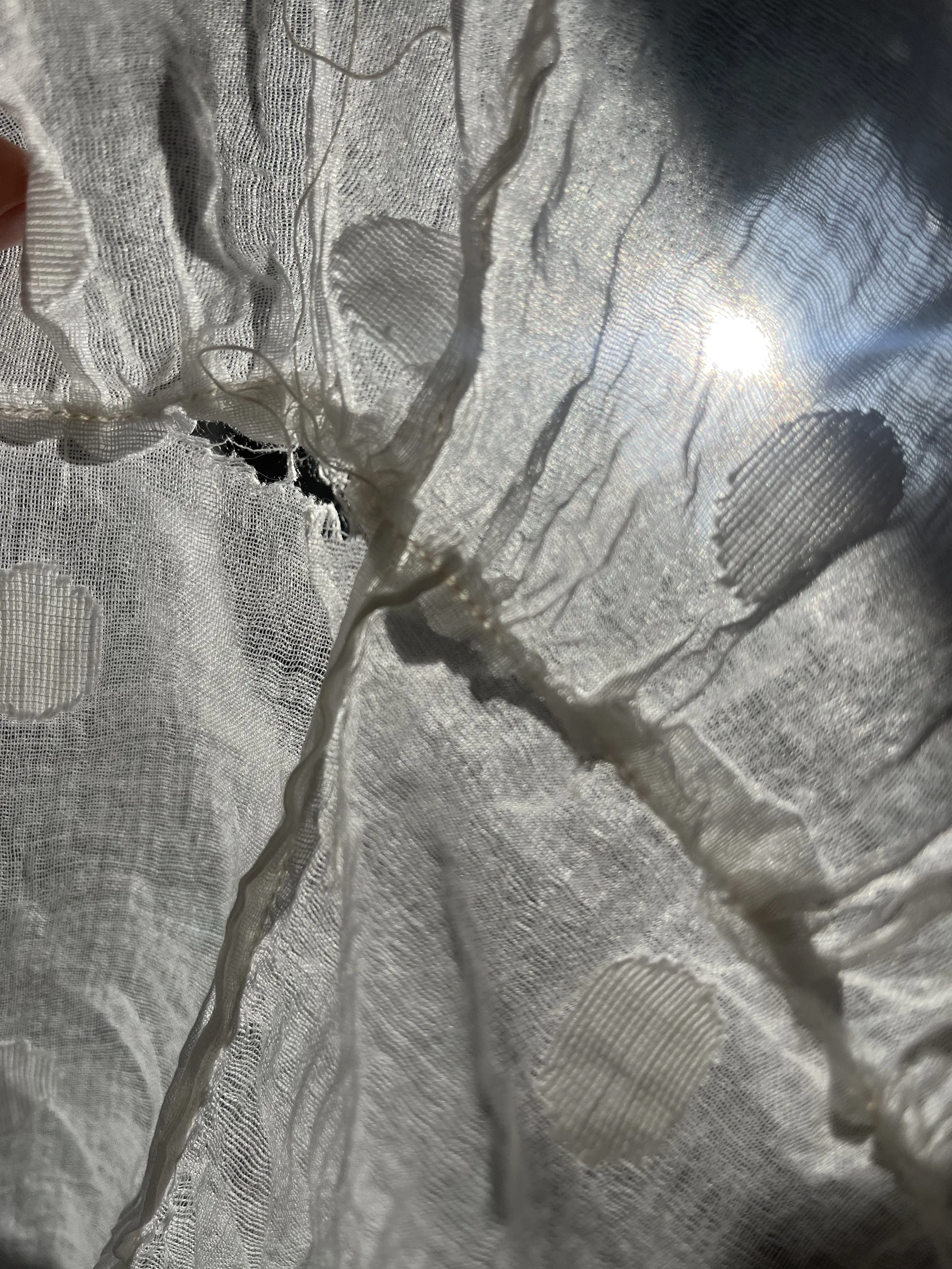
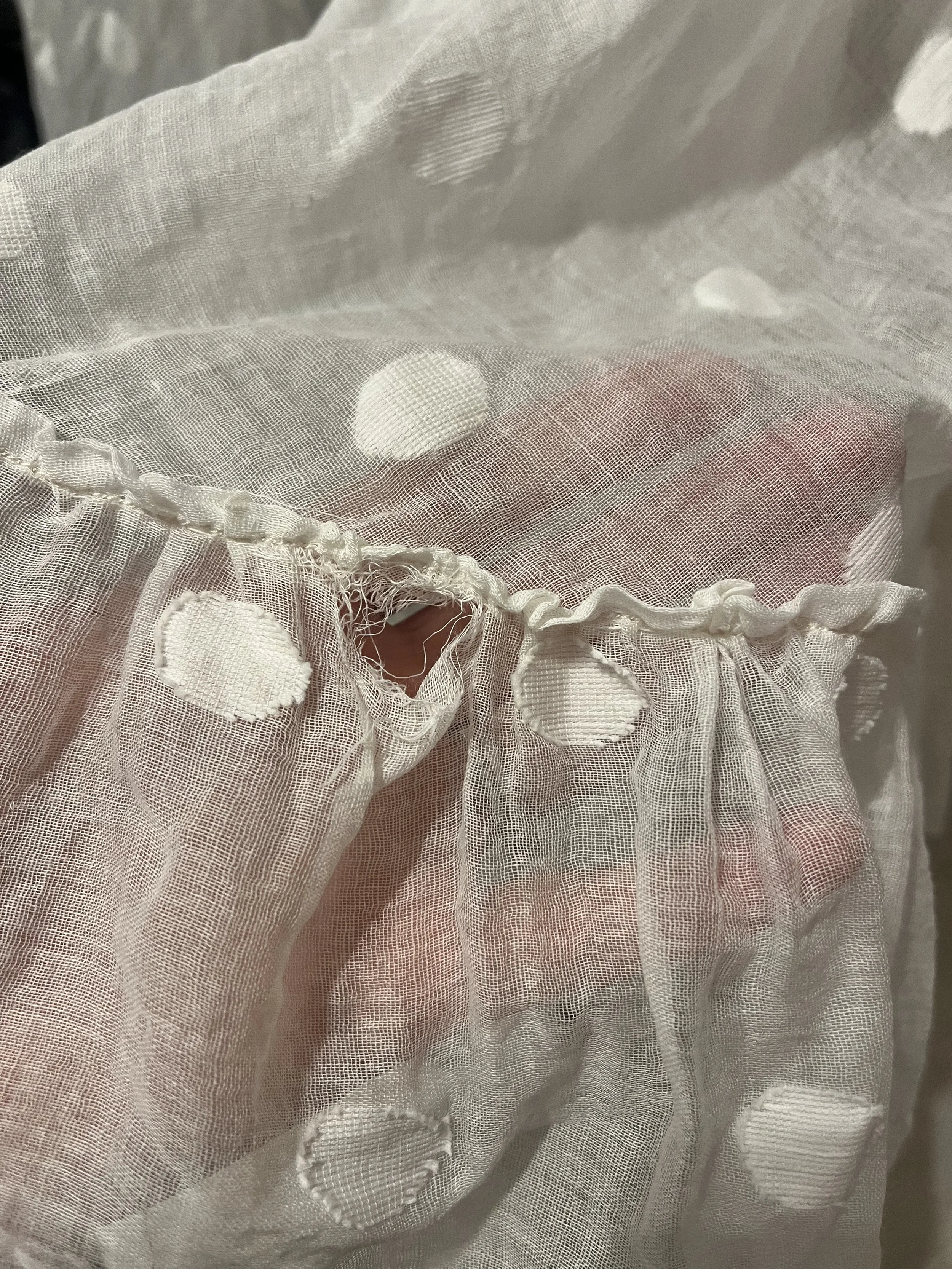
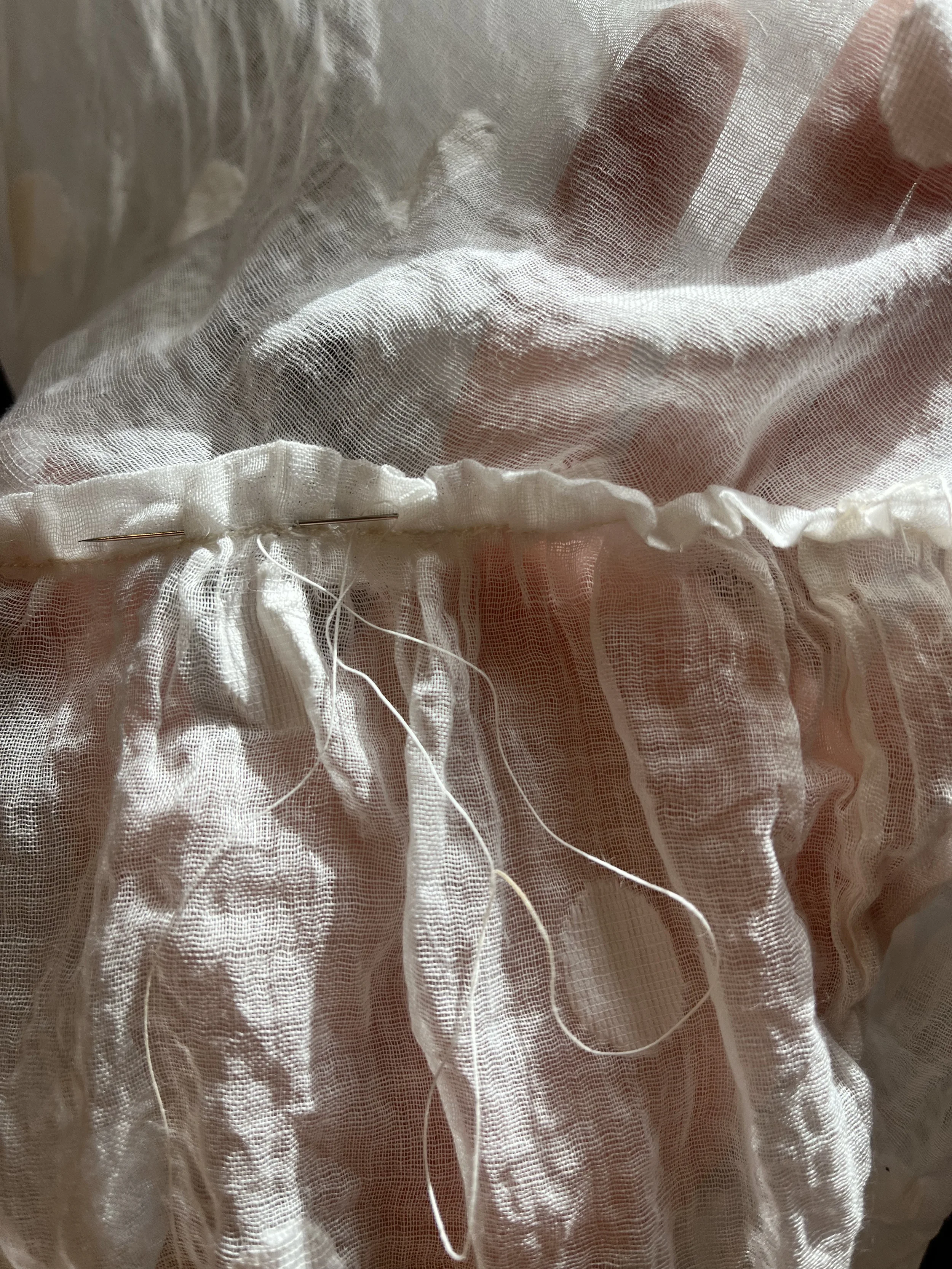
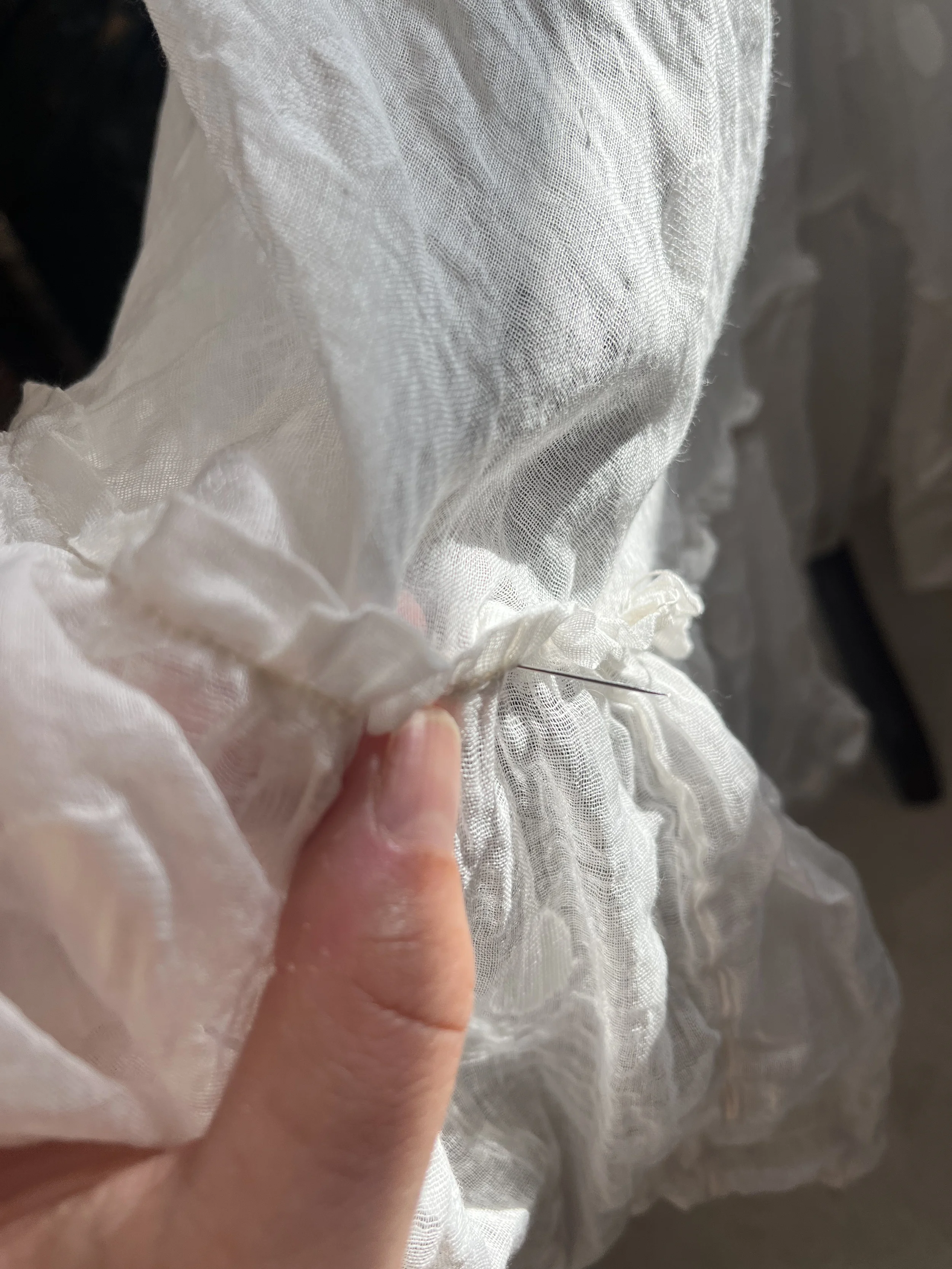
Restoration Tip: Holding fabric up to the light is an easier way to find holes. Work systematically through all seams first, then across the garment pieces.
Spending time working on the dress, I suspect that Ruth would have worn it with opaque under layers, the photographs look as if she may have had long gloves perhaps. Of course, the dress may have been heavily starched when originally worn and may have taken a stronger form and sense of structure, but I love the relaxed fall it has taken with time. To me, it has a personality that is youthful. There is a softness that is feminine in an understated way. For a bride today, it would look stunning with a simple slip layer underneath, which would lean into the lightness of the dress, physically and metaphorically. I could imagine it styled with loose meadow like flowers, and perhaps even a straw hat. The portrait collar is soft and as the fabric is so fine, it hangs with a framing informality, like a soft reassuring squeeze of shoulders.

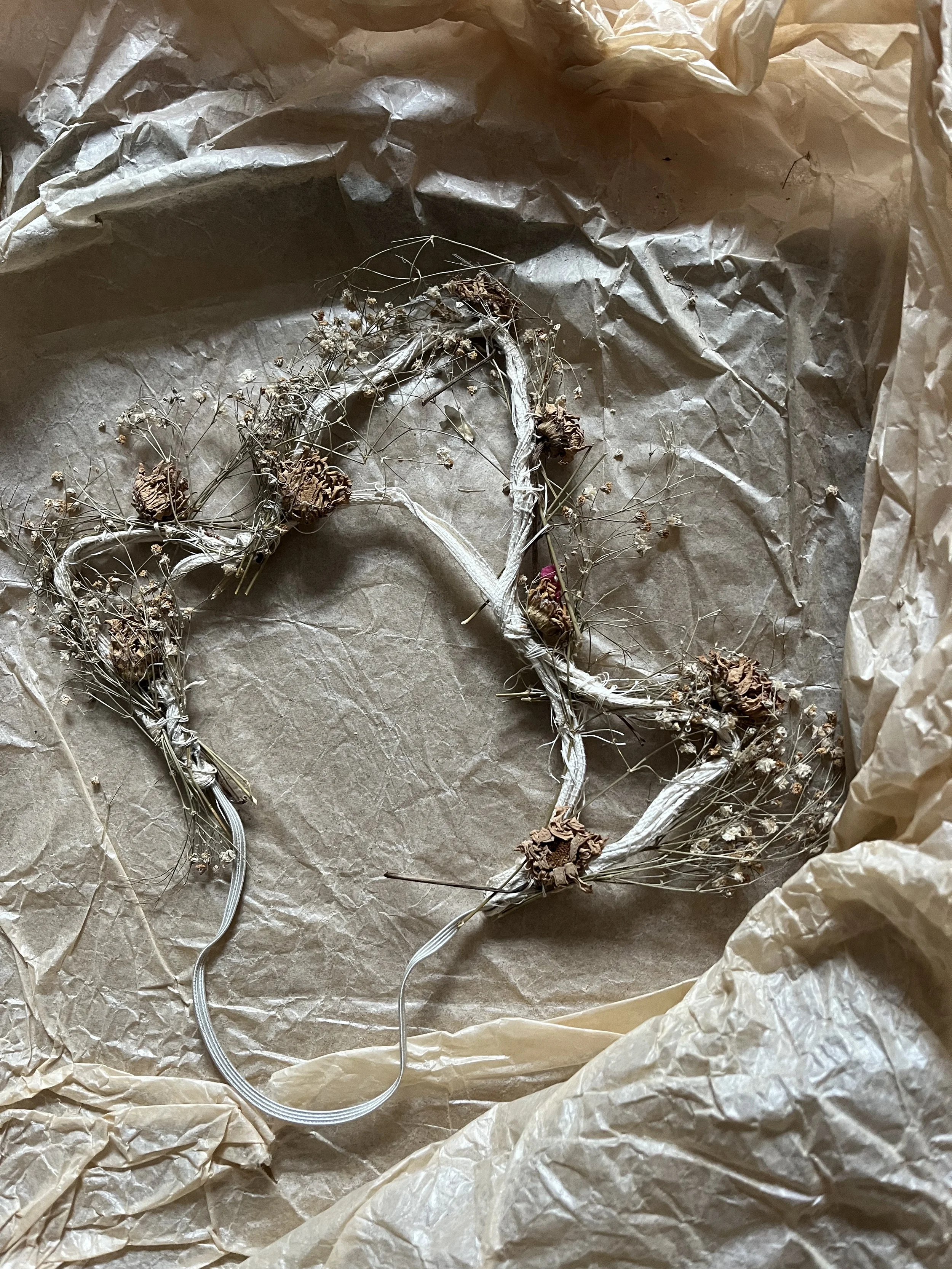
Ruth’s homemade floral headdress is preserved and can be seen in the studio, still alongside the original storage box and twine. I can see a slight yellow and rouge within the now dried flowers and imagine a brightness to the summer headpiece.
If you would like to know more about Ruth, who made and wore this beautiful dress, you can read more about her in the accompanying piece written by her son, Tim, in Part II of the series. There is a fascinating story including the locket that can be seen in her pictures.
Get in touch if you would like to arrange a studio visit to Tuesday’s Bride, to try Ruth’s dress or another beautiful dress from our vintage and antique bridal studio near Lewes, East Sussex.
If you have an heirloom to offer into the collection, to be loved once again, please do get in touch.
Thanks for reading!
Amy x